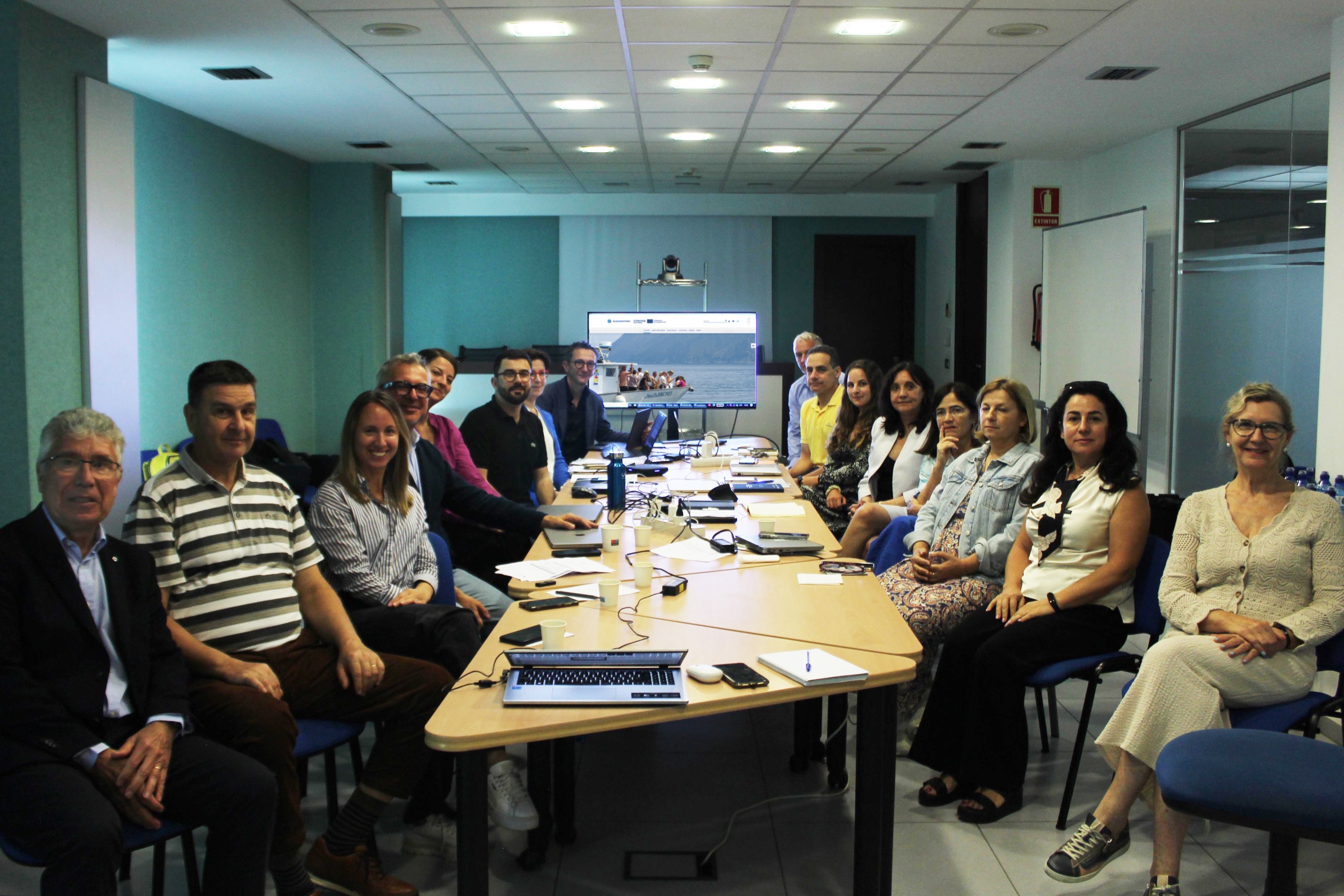

With this article, we open the article series “Blue regions in action”, a weekly tour across the eight regions participating in the BLUE ECOSYSTEM project. Each article will showcase how regions identified their challenges in the blue economy sectors, engaging stakeholders in co-creation processes, and accelerating innovative solutions through the TRAIN Lab model. We begin our journey in Croatia/Zadar County!
Croatia/Zadar County, represented by the project partner Croatian Chamber of Economy (HGK), carried out its first TRAIN Lab last 17 October, but… how did we get here?

STEP 1: Identification of regional challenges
Stakeholders from research, industry, public authorities, civil society and the natural environment participated in the co-creation workshops held on 17 September 2024 and 19 February 2025. This collective exercise ensured that the identified challenges reflect real territorial needs and are aligned with regional S3 strategies.
- Maritime and coastal infrastructure: Transformation of transport systems for more ecological business and adaptation of infrastructure to climate impacts, meeting international environmental standards and integration with EU corridors.
- Pollution and waste management: Legal regulation and supervision of wastewater pollution, enabling the disposal of grey and black water for owners of private boats outside marinas. Addressing the challenge of poor waste management in the fishing industry, by implementing a circular approach to waste management in order to reduce environmental damage.
- Sustainable tourism: Establishment of an integrated system for collecting, analysing and using tourism-related data in Zadar County, overcoming the current fragmentation of information sources and enabling better coordination among stakeholders.
STEP 2: CALL FOR INNOVATIVE SOLUTIONS
A total of 6 solutions were received during the call for transformative solutions, reflecting strong interest and engagement from the stakeholders. Of these 6, 1 was submitted by a regional public authority, 1 by an interest group/NGO, 1 by a higher education/research organisation, and 3 by SMEs.
STEP 3: ACCELERATING THE IDEAS THROUGH THE TRAIN LAB
On 17 October 2025, the Croatian Chamber of Economy – Zadar County Chamber organised the Blue Tech Pitch Šibenik 2025 as the first session of the TRAIN Lab in Croatia, in cooperation with InnovaMare Academy 3.0. The TRAIN Lab adopted a conference-style format, with 6 teams pitching their innovative ideas. The presented solutions included:
- Fishery waste recycling program – systematic collection and recycling of waste from fisheries
- Sustainable fishing gear initiative – development of sustainable fishing tools and equipment
- Coastal clean-up and education project – educational and volunteer coastal cleaning program
- ZATIS – Zadar tourism intelligence system – a system for collecting and analysing tourism data
- Adriatic AI navigator and blue watch – projects of Innovamare Academy students.
The Sustainable fishing gear initiative was selected as the best solution for its contribution to sustainable fishing practices and marine ecosystem preservation.
A second TRAIN Lab session took place last 15 December 2025 and represented the final phase of the acceleration process that brought together six innovative teams from the blue economy during the period from October to December 2025. The goal of the workshop was to present the progress made, the teams’ final action plans and development strategies for 2026, as well as to provide the foundations for their further international visibility and implementation of solutions.
Participants had the opportunity to:
- prepare final versions of their solutions,
- exchange experiences with mentors and stakeholders,
- define the next steps in development,
- learn more about funding opportunities and international activities in 2026.
Stay tuned to BLUE ECOSYSTEM social media for real-time updates (LinkedIn or website).
For further information about the project, please contact jordi.juarez@crpm.org